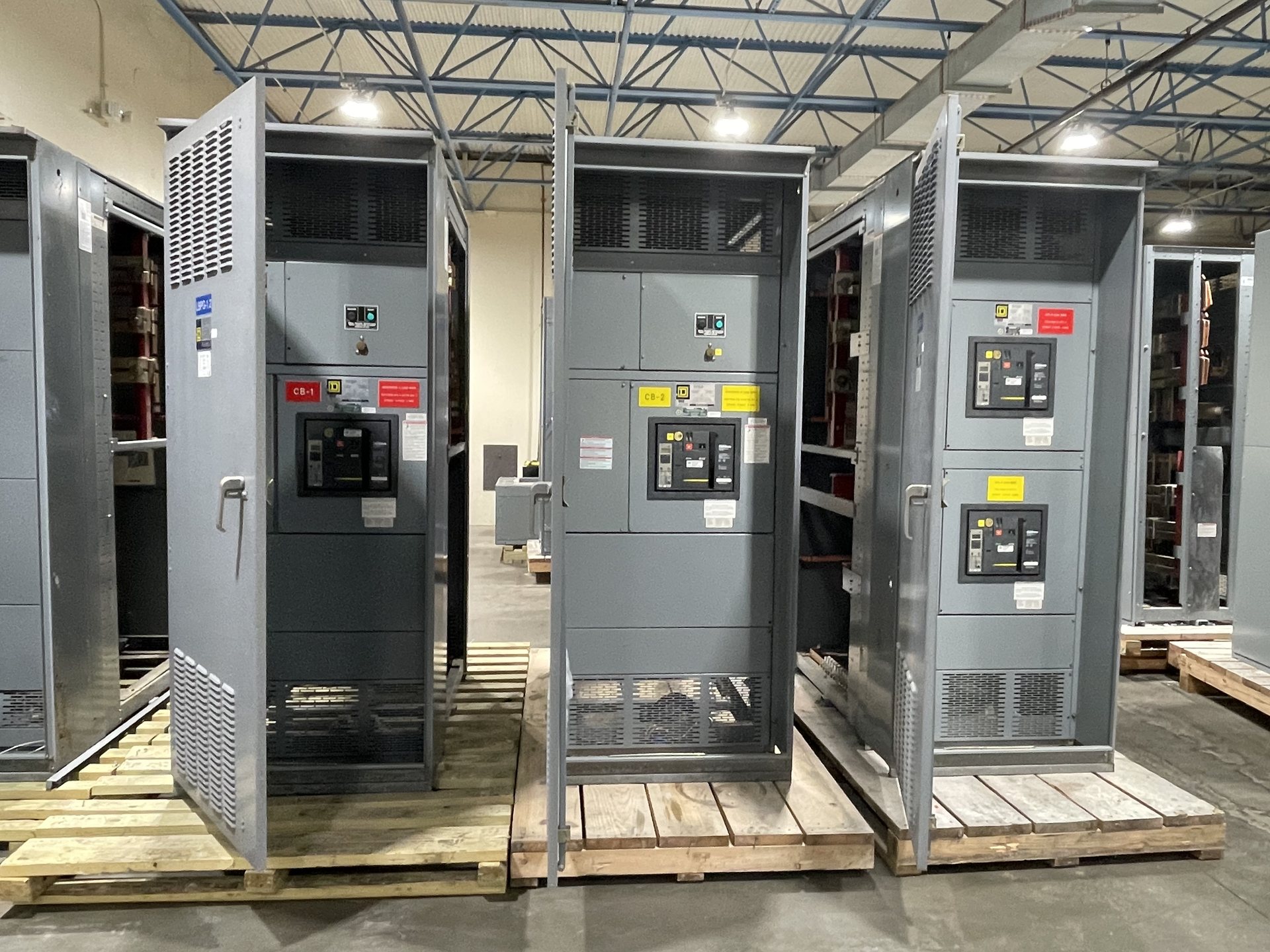
Use drawings and exterior labels to map the lineup
For a potential sale, start by comparing the lineup’s existing drawings with any readable exterior labels. A one-line drawing may show a main section feeding several feeder sections, while lineup or section labels may identify individual positions. Treat those sources as clues to organization, not proof that the installed equipment still matches the documents. If records disagree, preserve both versions and note the discrepancy rather than deciding which is correct.
A useful inventory separates what is visibly identified from what is only shown on paper. Record the listed main and feeder designations, the breaker counts stated in available documents, and any assembly ratings printed on accessible exterior labels. Keep the source beside each entry—for example, “drawing,” “exterior label,” or “unknown.” Do not open equipment to confirm internal contents, and do not test it; seller testing is not necessary for review.
Keep breaker counts and ratings tied to their sources
A drawing may list a main breaker and multiple feeder breakers, but that count describes the drawing unless it has been independently verified by a qualified professional. An exterior label may provide an assembly rating without identifying every installed device. Keep these details distinct in the inventory so a buyer can assess what the records say without treating a listed count or rating as a confirmed present condition.
When two documents use different section names or show different counts, share the versions as they are. A revision may reflect a proposed arrangement, a later change, or simply a record that does not describe the equipment now present; the cause may be unknown. Avoid reconciling mismatches through electrical configuration advice. A short note identifying the conflict is more useful than an unsupported conclusion about which breakers belong together.
Describe missing sections without filling in the gaps
If a drawing shows a main and several feeders but the available records cover only part of the lineup, identify the sections represented and mark the rest unknown. The same approach applies when an exterior label is readable on one section but absent or inaccessible on another. Do not infer a missing section’s rating, breaker count, manufacturer, or relationship to the remaining lineup from neighboring equipment.
A partial lineup can require a different review from a complete assembly. Explain whether records describe the entire lineup or only the sections being considered, and whether any shown section is not included in the potential sale. Do not assume that a missing section can be replaced, matched, or accepted with the remaining equipment. The precise assets purchased depend on review, so clear boundaries help avoid treating a drawing’s full lineup as the offered scope.
Share useful records and accessible images
Existing one-line drawings, equipment schedules, lineup schedules, and photographs of accessible exterior labels can help describe the equipment. Share copies as available, including pages that show section designations, breaker counts, and assembly ratings. If a document is incomplete, illegible, or of uncertain date, say so. Do not create certainty by filling blank fields, and do not take new photographs that would require approaching or handling electrical equipment unsafely.
A concise record can also distinguish the equipment’s stated identity from its unknown condition. For example, an owner might report that a drawing identifies a main and four feeder positions while noting that the current contents have not been verified. That wording preserves useful detail without suggesting a field inspection. Only qualified professionals should handle electrical equipment; sellers need not test, open, energize, isolate, disconnect, or move it to provide information for review.
Set clear boundaries for a potential equipment purchase
Florida Switchgear Buyers considers used, surplus, and decommissioned electrical switchgear and related equipment in all voltage classes, including low-voltage main and feeder sections. A potential sale may involve a complete lineup or identified sections, but inclusion is not automatic. The company reviews the available information and determines which precise assets it may purchase; no drawing, label, or breaker count by itself establishes acceptance or a purchase price.
For equipment purchased, the company makes a cash offer and pays upfront. It handles crane, rigging, disconnects, loading, freight, and hauling for purchased equipment. Those arrangements concern removal and transport of assets included in the purchase, not wholesale facility demolition or general electrical services. Owners should keep that distinction clear when a lineup sits within a larger facility or when some sections are outside the contemplated transaction.
Prepare the sale discussion without handling equipment
Before discussing a sale, gather the records and exterior-label images already available, then identify what remains unknown: perhaps the drawing revision, the number of sections represented, or whether a rating applies to one section or an assembly. Do not attempt to resolve those questions by operating equipment or arranging seller testing. Florida Switchgear Buyers does not require sellers to test equipment, and review can begin with the information the owner can safely share.
To discuss a potential sale, contact Florida Switchgear Buyers at (614) 715-3047 or saleselectricalbuyers@gmail.com. Include the distinction between documented sections and sections whose identity or presence is unknown, and indicate whether the records appear to cover the whole lineup. That context supports a focused review while leaving acceptance, purchase scope, and offer contingent on the company’s assessment of the specific assets.