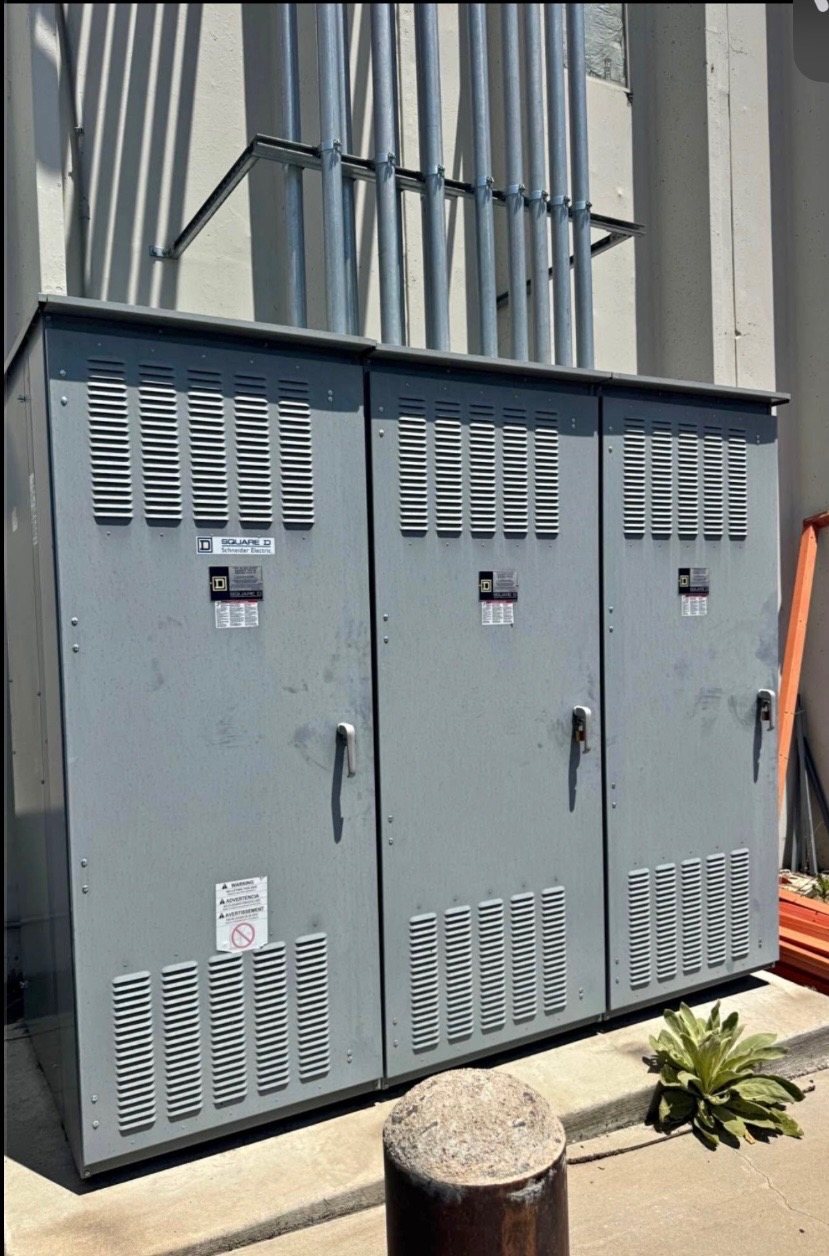
Start with the seller’s identification decision
Suppose, hypothetically, a Florida facility owner is preparing information about a switchboard for possible sale and sees “Main” on an existing label. The owner must decide whether to report that designation as fact, treat it as a clue, or leave the section unidentified. The safest useful answer is to preserve the label’s wording and source, then distinguish it from any interpretation made while assembling the sale information.
A main section generally refers to the part identified as the incoming or principal section in the available equipment records; outgoing sections serve connected circuits or equipment. The exact arrangement depends on the particular switchboard. A label or drawing may establish how a section was designated, but should not be treated as proof of its present configuration if records conflict or the visible arrangement is unclear.
Keep section identity separate from the full lineup
When an accessible drawing names a main section, record its title, drawing number if shown, and revision or date if available. Note whether the drawing describes the same lineup being offered, rather than assuming that a document applies because it is stored nearby. If the relationship cannot be confirmed, say so. A clear source trail helps a buyer review the proposed asset without turning an old notation into a verified equipment fact.
A switchboard may include the main section alongside one or more outgoing sections, but the main should not be used as a catch-all name for the entire assembly. If labels identify individual sections, preserve those designations separately and describe their apparent order only when it is plainly visible in existing, accessible information. Do not infer a section’s function from position alone; layouts and naming conventions can differ.
Record nameplate details as shown
Existing, safely accessible nameplate information can help distinguish a main section from other portions of a lineup. Share a legible photograph or transcribe the wording as printed, including the manufacturer or identifying marks, section designation, and ratings that are actually visible. Keep the transcription faithful: do not expand abbreviations, correct apparent errors, or fill gaps from memory. If a photograph cannot be obtained without approaching or handling equipment, rely on records already available.
Treat ratings as individual fields rather than one overall description. A nameplate might show voltage, current, or another marked value, while a drawing may show a different rating or apply a value to only one section. Report each source and its wording separately. If the documents do not make clear which value belongs to the main, label that relationship unknown instead of assigning the highest or most prominent rating to it.
Describe visible configuration without opening equipment
From existing photographs or a normal, safe vantage point, a seller may be able to describe the lineup’s visible section boundaries, labels, or apparent position of the main. State only what can be observed without opening covers, entering restricted areas, or approaching energized equipment. A photo showing several adjacent sections can be useful, but it may not establish internal construction, electrical condition, or which section serves a particular load.
If the main label is absent, obscured, or inconsistent with a drawing, explain the discrepancy rather than selecting the interpretation that seems most likely. For example, a seller could report that a drawing calls one section “Main” while an accessible exterior label is unreadable. That is more useful than presenting the drawing designation as a confirmed match. Qualified professionals must handle electrical equipment; sellers need not test or inspect internals to prepare sale information.
Separate outgoing sections and mixed ratings
List outgoing sections independently when existing labels or records identify them. Include their designations and marked ratings only where the source connects those details to a particular section. This prevents a rating printed on one feeder section from being mistaken for the main’s rating, and avoids describing a mixed lineup as though every section shared identical characteristics. If the available records group several sections together, preserve that grouping and note the limitation.
Where ratings differ, appear incomplete, or cannot be assigned confidently, report the known values alongside an explicit “unknown” or “not confirmed.” Do not calculate a lineup rating by adding section values, or assume that the main rating equals an outgoing rating. If a drawing and nameplate disagree, provide both references and let the discrepancy remain visible for review. An offer and the precise assets considered for purchase depend on the buyer’s review of the information and equipment.
Prepare a practical sale record
A useful record can combine the source of the main designation, any accessible drawing reference, nameplate wording, visible section labels, and a short account of unresolved points. Existing photographs and documentation may be shared; missing facts should remain unknown. Florida Switchgear Buyers purchases used, surplus, and decommissioned electrical switchgear and related equipment across all voltage classes, including equipment from decommissioned data centers and closed power plants. No seller testing is required.
For equipment it purchases, the company makes cash offers, pays upfront, and handles crane, rigging, disconnects, loading, freight, and hauling. These arrangements concern purchased equipment, not wholesale facility demolition or general electrical services. To discuss a potential sale, contact (614) 715-3047 or saleselectricalbuyers@gmail.com. Keep equipment in place and do not test, energize, open, isolate, disconnect, or move it; any handling must be left to qualified professionals.