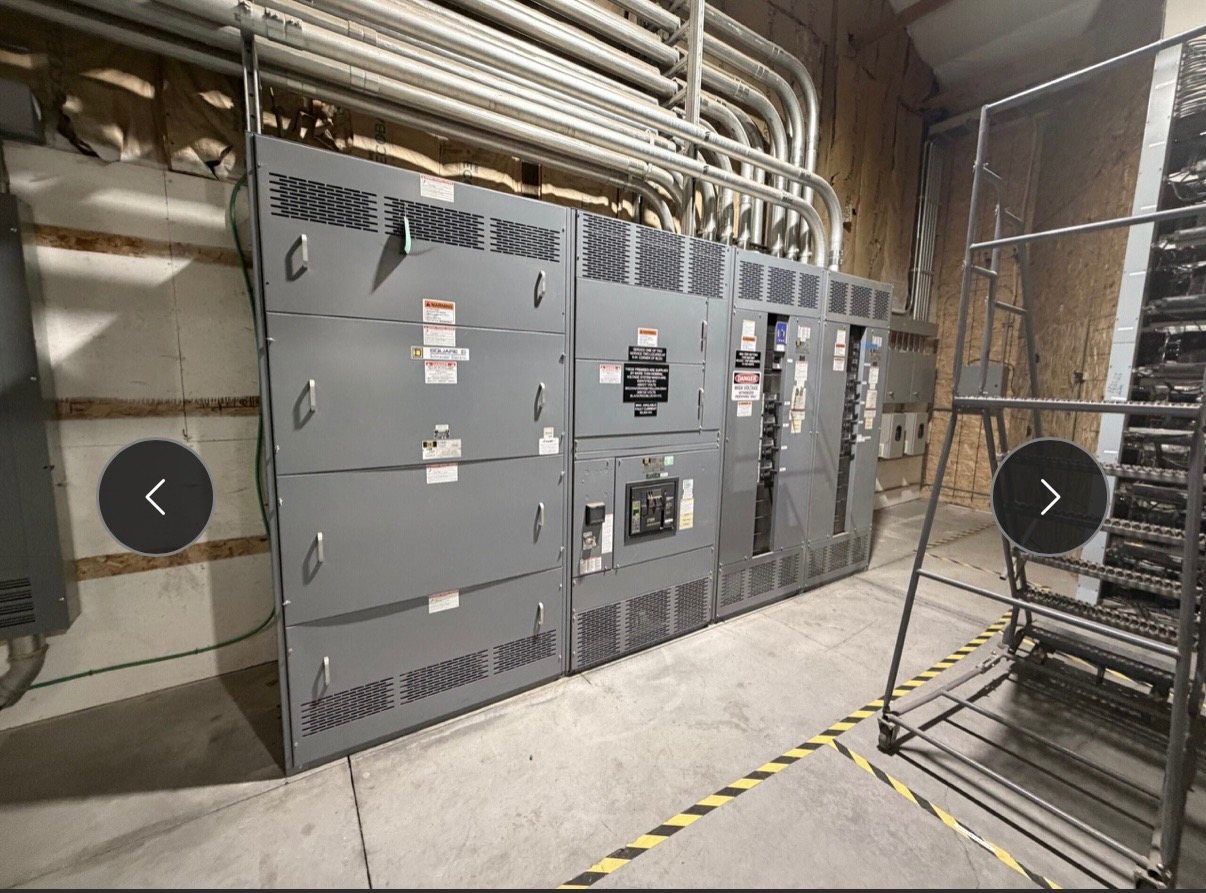
Start with a Hypothetical Section Boundary
Imagine a Florida facility considering a sale of one switchboard section while keeping adjacent sections in service. The owner’s first decision is not how to separate the equipment, but which identifiable assets may be offered and which must remain. A section that looks distinct in a lineup may still depend on shared structures, connections, controls, or operating arrangements; those details need review rather than assumption.
For a potential sale, describe the proposed group by its visible labels, position in the lineup, and available records, while separately naming equipment intended to stay. This is different from offering an entire board or facility: the proposed scope may be limited, and acceptance and the precise assets purchased depend on review. Do not treat a marked boundary on a drawing as proof that the equipment can be independently released.
Name What Is Offered and What Stays
A useful scope distinguishes the candidate section from retained sections in terms an outside reviewer can follow. Existing photographs and accessible drawings may help show lineup order, section identifiers, and neighboring equipment, but they should not replace a written inventory. If labels are absent, inconsistent, or unreadable in existing records, identify that as unknown instead of assigning a guessed name or configuration.
Retained assets deserve equal attention. A seller might intend to keep a neighboring section, a shared enclosure, or equipment associated with an ongoing operation; whether those items form part of a proposed purchase cannot be assumed from proximity alone. State the intended boundary and any ambiguity plainly. Florida Switchgear Buyers considers used, surplus, and decommissioned switchgear and related equipment across voltage classes, but each offered item remains subject to review.
Confirm Authority and Preserve Records
Before discussing a disposition, establish who is authorized to represent the owner and approve the proposed scope. A property owner, operating company, lender, contractor, or asset manager may have different roles, and the person coordinating information may not have authority to commit equipment. Clarifying ownership and approval responsibility early can prevent an apparent offer from being mistaken for permission to release assets.
Gather records already available to the seller, such as equipment schedules, prior asset lists, drawings, or photographs. Share only material that can be accessed without handling the equipment, and note its date or apparent relevance where known. Records may describe an earlier arrangement rather than the present one. Missing serial numbers, configurations, or revision history should remain identified as unknown; seller testing is not required for review.
Account for Dependencies and Uncertainty
A partial-board proposal is especially sensitive to dependencies across the proposed boundary. Adjacent sections may share a structure or have relationships documented in drawings, and the remaining installation may rely on equipment the seller hopes to sell. These are questions for qualified professionals and review of existing information, not reasons for a seller to inspect internally or attempt a separation. Do not infer independence solely from section labels or appearance.
If an operating or maintenance record identifies equipment as shared, required by retained assets, or subject to a restriction, include that information in the scope discussion. If no record answers the question, say so rather than presenting a dependency as confirmed or absent. Qualified professionals should handle electrical equipment. A potential purchase concerns only reviewed assets; it does not establish that adjacent equipment can remain in service or that a proposed division is technically appropriate.
Set a Release Window Without Rushing
Release timing should follow the owner’s operational, contractual, and approval requirements. A seller may need a future shutdown, replacement arrangement, or internal sign-off before equipment is available; another may be discussing already decommissioned assets. These are different circumstances, and neither creates a guaranteed purchase date. Provide the known constraints and identify unresolved approvals so that timing can be considered alongside the proposed scope.
Do not announce equipment as ready for removal merely because a sale is being explored. For assets purchased, Florida Switchgear Buyers handles crane, rigging, disconnects, loading, freight, and hauling; that work is tied to purchased equipment and is not a commitment to demolish a facility or perform general electrical services. The seller should leave technical and physical handling to qualified professionals and coordinate any release only after scope and arrangements are reviewed.
Submit a Clear Partial-Sale Proposal
A concise submission can explain the candidate section, the equipment expressly retained, the records available, known dependencies, and any approval or release constraints. Existing photographs may be shared when accessible; avoid creating new images by approaching or handling equipment. If a detail is uncertain, label it accordingly. That honest distinction helps review focus on what is actually documented rather than on an assumed board layout, condition, or compatibility.
Florida Switchgear Buyers makes cash offers and pays upfront for equipment it purchases; the offer and exact purchase scope depend on review. Contact the team at (614) 715-3047 or saleselectricalbuyers@gmail.com with the available information. A discussion is not acceptance of every listed section, and no seller testing is necessary. Keep the retained-versus-offered boundary explicit as the review proceeds, especially if records or ownership approvals later change.