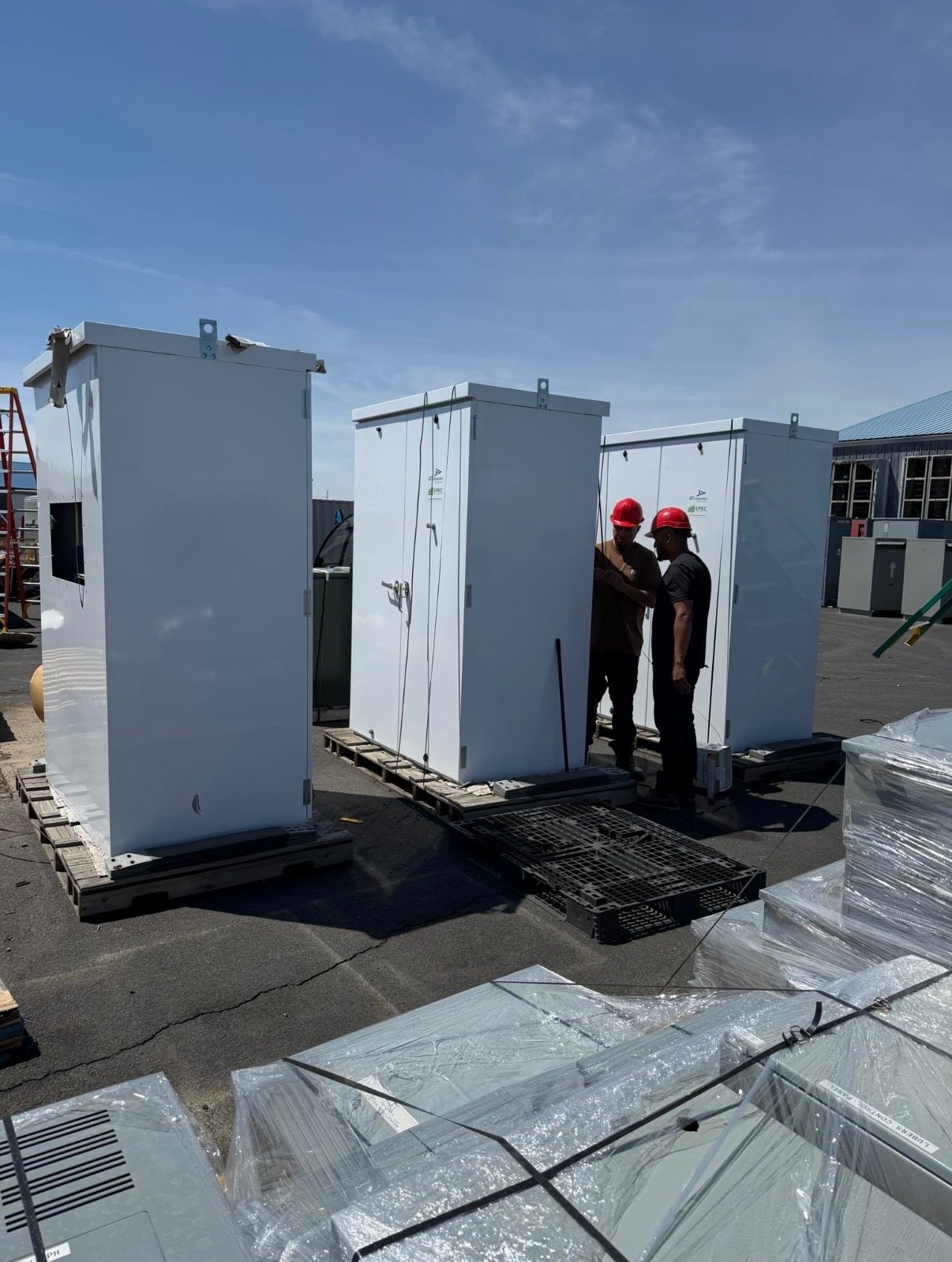
Reconcile the list with the assets offered
A spare-breaker line on an asset register does not establish that a breaker is included in a sale, or that a related cubicle is available. Start by separating the items you intend to offer from equipment that remains installed, is assigned to another project, or is not under your authority to sell. The list is a reference; the proposed sale should describe the actual scope as you understand it.
For each proposed item, note whether the record appears to refer to a breaker, a cubicle, or both, and whether that item is included in this transaction. If the record groups several assets together but you can identify only some as sale candidates, say so. Leaving the scope qualified is more useful than treating a broad register entry as proof that every associated component is available.
Describe breakers and cubicles separately
A spare breaker and a cubicle are distinct assets for reconciliation, even if records associate them with the same lineup or equipment reference. Identify each separately when the available records allow it. A breaker that is separately stored should not be described as an installed breaker; likewise, a cubicle shown on a drawing or asset list should not be represented as part of the offer unless its inclusion is known.
If cubicles are installed while spare breakers are separately accounted for, make that distinction clear in your description without attempting to inspect or alter equipment. If a cubicle is separately recorded but its present status is uncertain, mark the status as unknown. Florida Switchgear Buyers considers used, surplus, and decommissioned switchgear and related equipment across all voltage classes, but any offer and the precise assets purchased depend on review.
Use existing identification, not assumptions
Existing accessible nameplate photographs, inventory images, or records may help identify a breaker or cubicle. Share the manufacturer, model, serial number, or other label information only as it is already documented and readable. Do not guess at obscured characters or fill a blank from a neighboring asset. If the label is unavailable, record that fact rather than presenting an inferred identifier as certain.
A familiar manufacturer or model reference can help distinguish entries, but identification is not proof of compatibility, condition, or value. Do not claim that a spare fits a particular cubicle unless that association is documented and you are confident the record applies to the item offered. Brands may be included solely to identify equipment; their mention does not indicate affiliation or endorsement by the buyer.
State association and condition gaps plainly
Records sometimes link a spare breaker to a lineup, cubicle, or site without establishing whether it remains the correct match. Describe the association as recorded—for example, “listed with” a particular equipment reference—rather than as a confirmed fit when evidence is incomplete. If no association is known, say that it is unknown. This gives a reviewer a useful distinction without asking the seller to verify the relationship physically.
Condition notes should follow the same standard. Report documented status such as “surplus,” “decommissioned,” or “condition not recorded” only when it reflects the information available. Do not characterize a breaker as operational because it is listed as a spare, or a cubicle as complete because the register shows a single line item. Seller testing is not necessary; unknown condition can remain unknown for review.
Share records safely and keep scope clear
A concise reconciliation can show the item description, existing identifier, whether the breaker or cubicle is included, any recorded association, and what remains unknown. Existing accessible documents or photographs may be shared for review. There is no need to open, test, energize, isolate, disconnect, move, or otherwise handle electrical equipment to prepare this information; only qualified professionals should handle electrical equipment.
If the register and the proposed sale differ, explain the difference rather than silently changing the record. For instance, a list may show several spare breakers while the seller is offering only the entries that can be identified from existing records. That does not establish that the remaining entries are unavailable or unacceptable; it simply keeps the present offer scope distinct from unresolved inventory questions.
Understand review, purchase, and removal
Florida Switchgear Buyers makes cash offers for used, surplus, and decommissioned switchgear and related equipment, including equipment from decommissioned data centers and closed power plants. An offer and the specific assets purchased are contingent on review. For equipment purchased, payment is upfront, and the seller is not required to test it. Sharing clear scope and known gaps can help the review focus on what is actually being offered.
For purchased equipment, Florida Switchgear Buyers handles crane, rigging, disconnects, loading, freight, and hauling. These arrangements apply to assets purchased; they are not a promise to accept every listed breaker or cubicle, nor an offer of wholesale facility demolition or general electrical services. To discuss a potential sale or share existing records, contact (614) 715-3047 or saleselectricalbuyers@gmail.com.