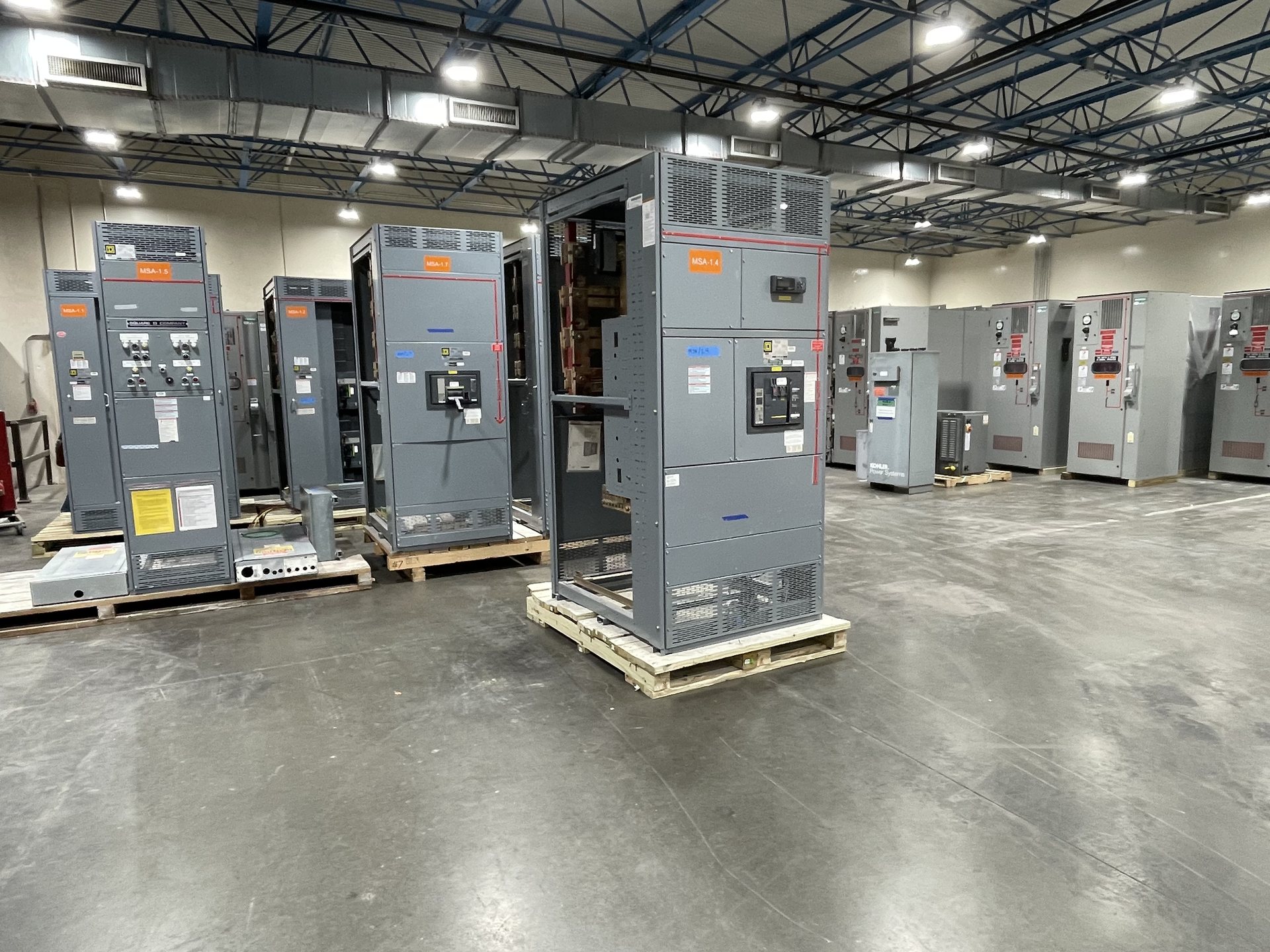
Start with what the relay labels identify
Medium-voltage switchgear may enter a surplus inventory with protection relays still identified by front-panel labels, door schedules, or an equipment list prepared for another purpose. Those references can help distinguish one lineup or section from another. They do not, by themselves, establish the condition of the equipment, the relay’s present configuration, or whether the assembly will suit another application.
If existing photographs or accessible paperwork show a relay designation, circuit name, or protective function, share that information as recorded rather than interpreting it. A label may be abbreviated, outdated, or specific to the former installation. Florida Switchgear Buyers reviews used, surplus, and decommissioned switchgear and related equipment in all voltage classes; the assets and any offer remain subject to review.
Use drawings to explain lineup context
A one-line diagram, elevation, or section drawing can place a relay reference in context: for example, it may associate a cubicle with a feeder, tie, or other circuit designation. If such drawings are already available, their revision date and any visible page or section references can help readers understand which equipment they describe. Do not assume a drawing matches the current lineup solely because its title appears relevant.
Where records use different names for the same apparent section, preserve both references and note the source of each, such as a drawing title or inventory entry. That is more useful than silently reconciling a discrepancy. Drawings are identifying information for review, not proof of present wiring, operating status, or compatibility, and sellers do not need to produce newly prepared documentation.
Separate identification from settings
Relay nameplates and labels may identify a device or its stated role, while separate records may contain pickup values, time delays, or other settings. These are different kinds of information. A printed setting sheet can document what a record says; it does not confirm that those values remain in effect or that protection performance has been verified.
If settings pages are already in the file, they may be shared as historical records with their dates and associated section references, when those details are visible. Avoid presenting a value as current unless an authoritative record establishes that status. No seller testing is necessary, and no one should be asked to energize, open, or otherwise handle equipment to establish settings or performance.
Make omissions explicit, not consequential
Protection records can be incomplete for ordinary inventory reasons: a drawing may be missing, a relay schedule may cover only part of a lineup, or a file may lack revision information. Describe the gap plainly—for instance, “no settings sheet found in the records available”—rather than concluding that settings do not exist or that protection is absent. An unknown should remain unknown.
A brief inventory note can distinguish documents reviewed from documents not located and identify any uncertain section match. This helps prevent an old schedule from being mistaken for a complete record set. It also keeps the sale review focused on what is actually offered; missing records do not, on their own, establish equipment condition, value, or whether particular assets can be purchased.
Keep records attached to the right assets
When a surplus inventory contains multiple lineups or removed sections, organize available records by the identifiers already present on equipment schedules or drawings. If a document cannot be confidently matched, label the association as uncertain instead of assigning it to the nearest-looking section. This distinction matters when similar circuit names appear across separate records or when equipment was reorganized before decommissioning.
Existing photographs may show exterior labels or lineup identifiers and can supplement drawings without replacing them. Share only material already accessible through ordinary records or images; do not remove covers, approach hazards, or relocate equipment to obtain better views. Only qualified professionals should handle electrical equipment. A sale inquiry need not involve seller testing or new field verification.
Prepare a useful sale review
For a potential sale in Florida, a concise inventory can pair the equipment description with visible relay labels, drawing references, and known record gaps. Include voltage information only when it is stated in accessible documentation or otherwise known; mark it unknown when it is not. This approach gives reviewers useful context without turning uncertain paperwork into a technical claim.
Florida Switchgear Buyers makes cash offers and pays upfront for equipment purchased. For purchased assets, it handles crane, rigging, disconnects, loading, freight, and hauling; purchase scope is contingent on review. This is equipment purchasing and removal for purchased assets, not a promise of facility demolition or general electrical services. To discuss available records and equipment, call (614) 715-3047 or email saleselectricalbuyers@gmail.com.