Why the Main-Tie-Main Arrangement Needs Careful Identification
A medium-voltage main-tie-main inquiry is more specific than a general switchgear listing because the lineup may be described through three functional positions: two mains and a tie. Existing drawings, schedules, or equipment labels may use different names for those positions. Share the descriptions as they appear rather than translating them into a presumed operating arrangement; the records help identify the equipment, but do not establish an undocumented configuration.
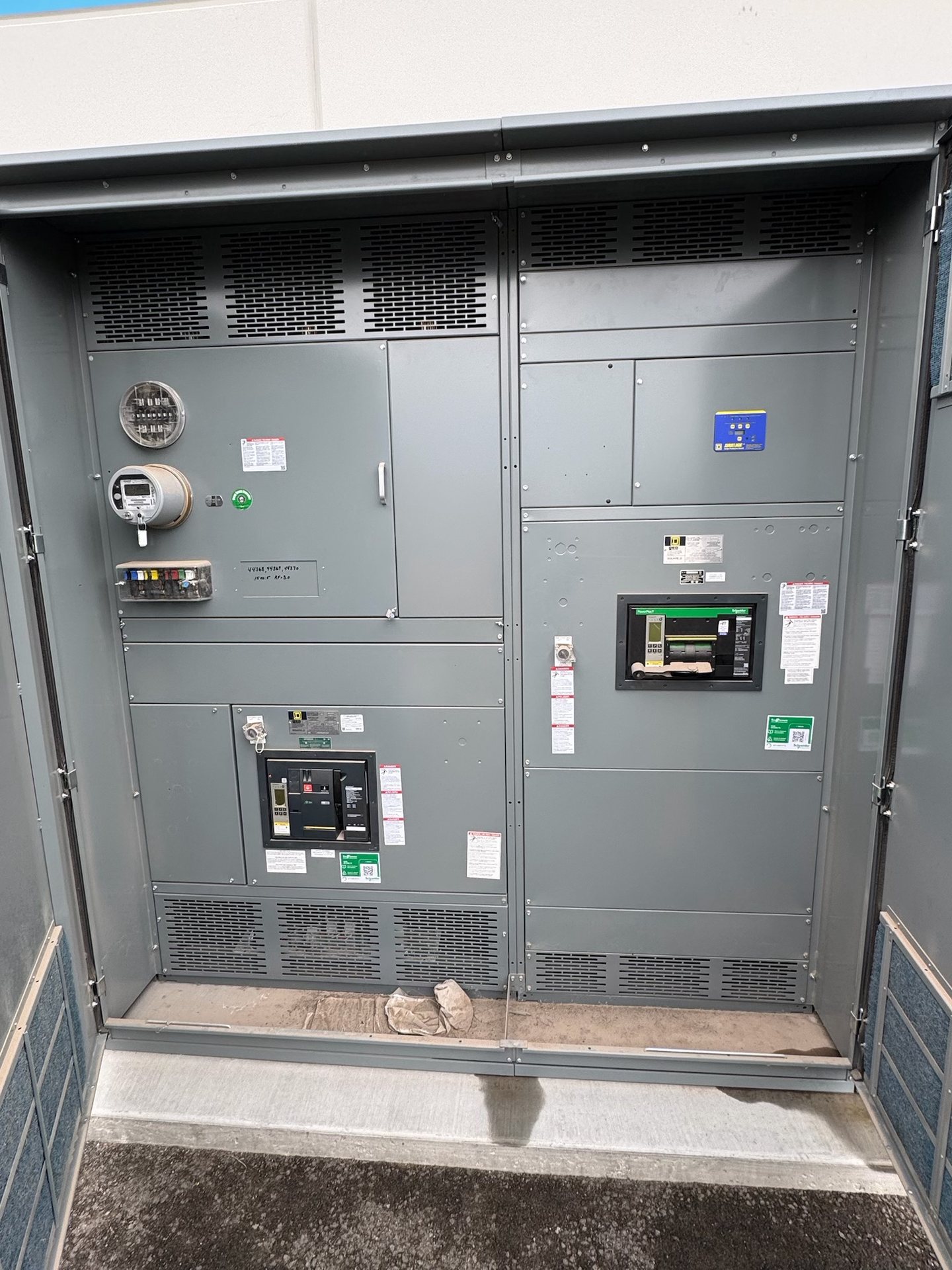
Two lineups that look similar in a photograph may differ in section count, breaker assignments, or how the tie position is represented in the available records. Appearance alone cannot confirm whether a section is a main, tie, feeder, or another part of the lineup. If the function is not documented or identifiable from accessible records, mark it unknown. Do not open, test, energize, disconnect, or move equipment to resolve the question.
Use Existing Records to Describe the Three Positions
If an existing one-line diagram or lineup drawing labels two mains and a tie, provide it alongside any available equipment schedule. Preserve the drawing’s own terms and identifiers, including drawing number or revision when visible. A simplified description such as “main A, tie, main B” can orient a review, but should not replace the source record or imply that an undocumented interlock, operating sequence, or electrical relationship has been verified.
Descriptions may be incomplete or inconsistent: one record could call a position “tie” while another uses a section number, for example. Include both references and explain where each appears rather than choosing one as correct. If documents do not show how a breaker relates to a position, say so. Existing accessible documentation and photos can be shared; no seller testing is necessary, and missing information should remain explicitly unknown.
Inventory Sections and Breaker Identifiers Separately
A section-by-section inventory makes it easier to distinguish the lineup from the breakers and other items associated with it. Record the section identifiers as shown in existing schedules or labels, then list breaker identifiers separately when available. For example, a document may identify two main positions and a tie while assigning distinct breaker numbers; retain those numbers exactly rather than assuming they follow a standard naming pattern.
If identifiers are absent, obscured in existing photographs, or inconsistent across records, note the limitation instead of estimating them. Do not access internal compartments or equipment to find a label. A broad description such as “medium-voltage main-tie-main lineup” can still start the inquiry, while a count of documented sections and a list of known identifiers help clarify what the description covers. Any unlisted or uncertain component remains subject to review.
Define Whether the Sale Is Complete or Partial
State plainly whether the proposed sale concerns the complete lineup or selected assets. “Complete” should mean the sections and associated equipment the seller intends to include, not every item that might appear in the room or on a drawing. If the intended scope is two mains and a tie, identify whether breakers, connected sections, or other listed items are included only when existing records support that description.
For a partial sale, identify the specific sections or breakers proposed, using their documented identifiers, and distinguish them from equipment retained by the seller. A request covering one main and its documented breaker is materially different from one covering all three positions. If boundaries are not clear in available records, explain the uncertainty rather than implying that a selected section can be separated or removed. Purchase scope is determined through review.
Flag Configuration and Condition Unknowns Without Guessing
A main-tie-main label describes an inquiry, not a verified switching scheme, operating condition, or complete equipment history. Records may not establish whether all expected positions are present, whether identifiers match across documents, or whether the lineup has been altered. Present known facts as facts and use “unknown” for gaps. A photograph can support identification of visible exterior features, but it cannot establish internal condition or confirm a configuration that the records do not show.
Do not make a sale depend on seller-performed testing or on a guessed explanation for an unfamiliar section. Florida Switchgear Buyers purchases used, surplus, and decommissioned switchgear and related equipment in all voltage classes, including equipment from decommissioned data centers and closed power plants. An offer and the precise assets purchased depend on review; the page’s description alone cannot confirm acceptance, condition, compatibility, or value.
Prepare the Inquiry and Understand Removal Scope
Share the records and existing photos that are accessible, along with the intended sale boundary and any known gaps. Florida Switchgear Buyers makes cash offers and pays upfront for equipment purchased; sellers are not required to test it. For purchased assets, the company handles crane, rigging, disconnects, loading, freight, and hauling. These arrangements concern equipment purchased and its removal, not wholesale facility demolition or general electrical services.
For a review of a medium-voltage main-tie-main inquiry in Florida, contact (614) 715-3047 or saleselectricalbuyers@gmail.com. Include the wording used in existing documents, section and breaker identifiers that are actually documented, and whether the proposed scope is complete or partial. If the configuration cannot be established from those materials, say so; only qualified professionals should handle electrical equipment, and the seller need not investigate it physically.