Start with authority to discuss the equipment
A pad-mounted switchgear inquiry often depends on more than identifying the equipment. The person who knows its location may not be authorized to discuss a sale, while the owner or asset manager may not have the site-access details. Before sharing information, identify who can speak for the equipment owner and who can explain the property’s access rules. These roles may belong to different people, especially during a closure or property transition.
If an authorized contact is coordinating with a landlord, utility, contractor, or facility representative, make that distinction clear rather than assuming one party controls every decision. Florida Switchgear Buyers reviews used, surplus, and decommissioned electrical equipment for possible purchase; the specific assets considered remain subject to review. A preliminary inquiry can identify the decision-makers without implying that a sale or access arrangement has already been approved.
Describe the location without exposing restricted access
A useful location description can be general at first: for example, whether the equipment is outdoors beside a building, within a controlled yard, or behind a secured property entrance. Share only details you are permitted to disclose. If a site requires advance authorization, escort, check-in, or coordination with a designated contact, note that restriction so purchase-related discussions do not presume unrestricted entry.
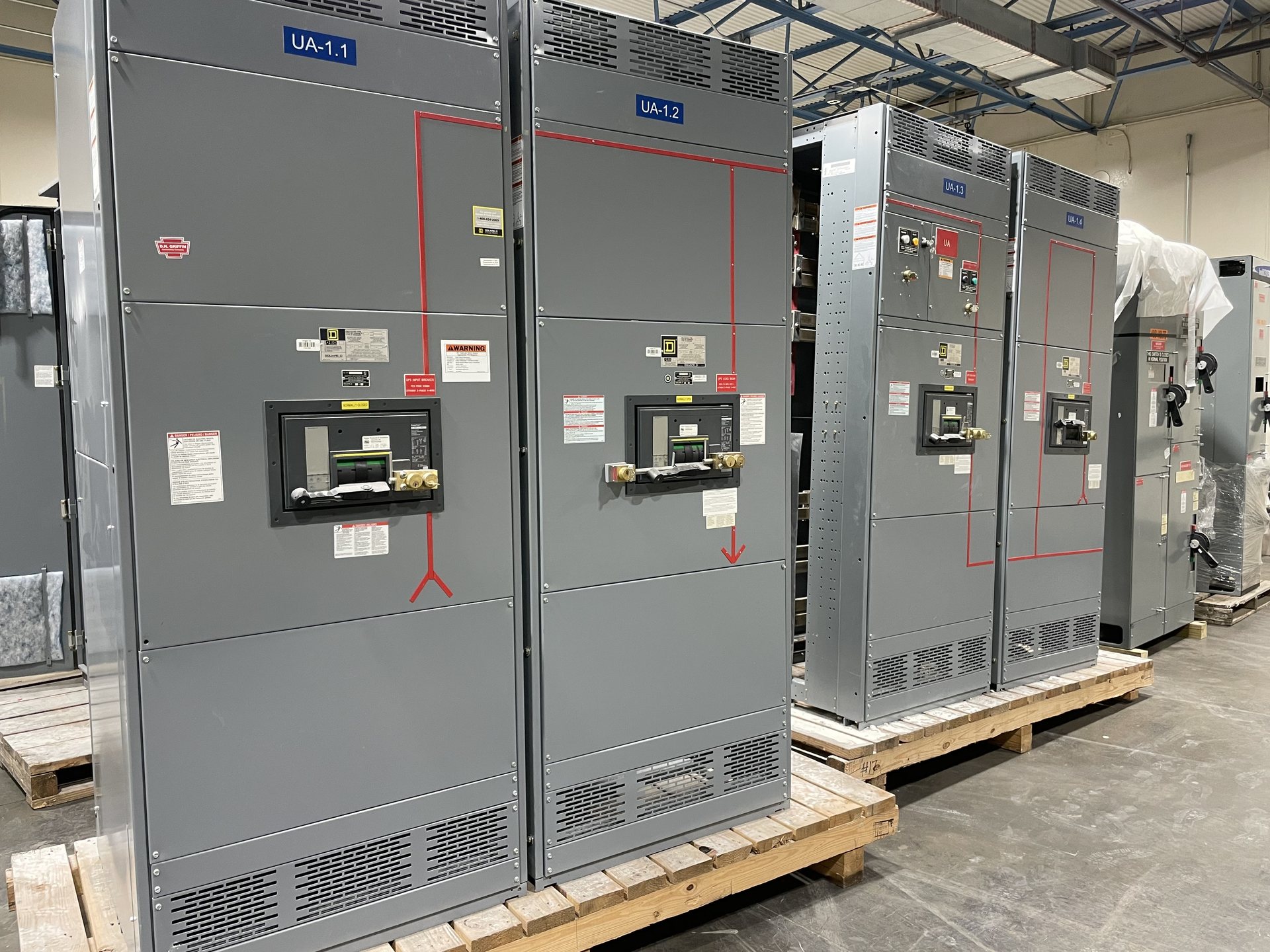
Access conditions matter because pad-mounted equipment may sit apart from the building or within a constrained service area. Describe known obstacles in ordinary terms, such as a gate, narrow approach, parked vehicles, or a restricted operating area, if that information is available and appropriate to share. Do not enter a restricted area or approach equipment to gather details. Qualified professionals alone should handle electrical equipment.
Treat dimensions as helpful, not a condition of inquiry
Existing records may contain the enclosure’s approximate length, width, and height, or a site plan may show its footprint. Those measurements can help distinguish one asset from another and inform an initial review, but they are not a substitute for inspection or confirmation. If a dimension is estimated, identify it as an estimate; if no measurement is recorded, say it is unknown rather than trying to obtain one at the equipment.
Accessible photographs, inventory sheets, nameplate images already held in company records, or decommissioning documents may also help describe the asset. Share only materials you are authorized to provide, and do not open a cabinet, energize or test equipment, or make a new image that requires approaching or handling it. Seller testing is not required. A missing specification should remain unknown until qualified review can establish it.
Separate access readiness from release authority
A site may be accessible while the equipment is not yet approved for sale or release. Conversely, ownership may have authorized a sale even though entry requires later coordination. Keep these questions separate: who may authorize disposition, who controls access, and whether the equipment is actually available to be released. This distinction is useful when an operating facility is closing in stages or when a property transaction has not concluded.
If a release date is uncertain, report the uncertainty plainly, such as “pending internal approval” or “date not confirmed,” rather than supplying a target as though it were settled. A prospective buyer can review information without a confirmed removal date, but any offer, assets purchased, and subsequent logistics depend on review and coordination. Do not assume an inquiry reserves equipment, commits either party, or establishes a schedule.
Clarify what purchase-related logistics cover
For equipment it purchases, Florida Switchgear Buyers handles crane, rigging, disconnects, loading, freight, and hauling. That scope concerns purchased equipment; it should not be read as a commitment to remove every item at a site or to perform wholesale facility demolition or general electrical work. Where several assets share a pad or enclosure, identify which equipment is being discussed and leave the precise purchase scope subject to review.
The seller’s role in an initial inquiry is to provide authorized information and identify site rules, not to plan a lift or direct equipment handling. Do not disconnect, move, open, or otherwise handle switchgear. Any work involving electrical equipment belongs to qualified professionals. If a property requires separate approvals or coordination before purchase-related removal, describe those requirements; do not assume that a buyer’s logistics replace the site owner’s procedures.
Send a clear inquiry while preserving unknowns
A concise inquiry can state the seller’s authority, the equipment’s general location, any known access restrictions, available dimensions or records, and whether release approval or timing remains uncertain. For example, “approximate enclosure dimensions available; access requires an authorized site contact; release date unknown” is more useful than an unsupported claim that the unit is ready. Florida Switchgear Buyers considers used, surplus, and decommissioned switchgear and related equipment across voltage classes, including equipment from decommissioned data centers and closed power plants.
For an inquiry or to share available information, contact Florida Switchgear Buyers at (614) 715-3047 or saleselectricalbuyers@gmail.com. The company makes cash offers and pays upfront for equipment it purchases; neither an offer nor the assets ultimately purchased is guaranteed before review. Sellers do not need to test equipment. A careful account of what is known, what remains unknown, and who can authorize access helps keep the discussion specific without implying acceptance or a removal schedule.