Start with the decision, not the voltage label
Imagine a facility owner preparing a surplus inventory and finding a switchboard marked 600 volts. The owner must decide whether to list it as a standalone asset, include associated sections, or wait for more records. The marking is useful for identification, but it does not establish the voltage of the site where the board operated, its present condition, or whether a buyer will accept it.
For a sale review, keep the equipment rating distinct from any reported operating voltage. A facility may describe its system using a different figure, or its records may be incomplete; neither circumstance changes what is actually marked on the switchboard. If the operating voltage is uncertain, say so rather than treating the equipment label as proof of the site configuration.
Record what the nameplate does—and does not—tell you
An accessible nameplate or existing asset record can help identify a switchboard reported or marked as 600 volts. Share a legible photograph or transcription if already available, along with any known manufacturer, model, serial number, or date information. These details can support review, but they do not independently establish service history, completeness, remaining life, or suitability for another installation.
Avoid turning a rating into a compatibility claim. A prospective buyer would need to review the specific equipment and relevant details before determining whether it fits a particular purpose. A 600-volt marking alone does not prove that the board is interchangeable with another switchboard, that its components match a system, or that it has a particular market value.
Define the inventory boundary clearly
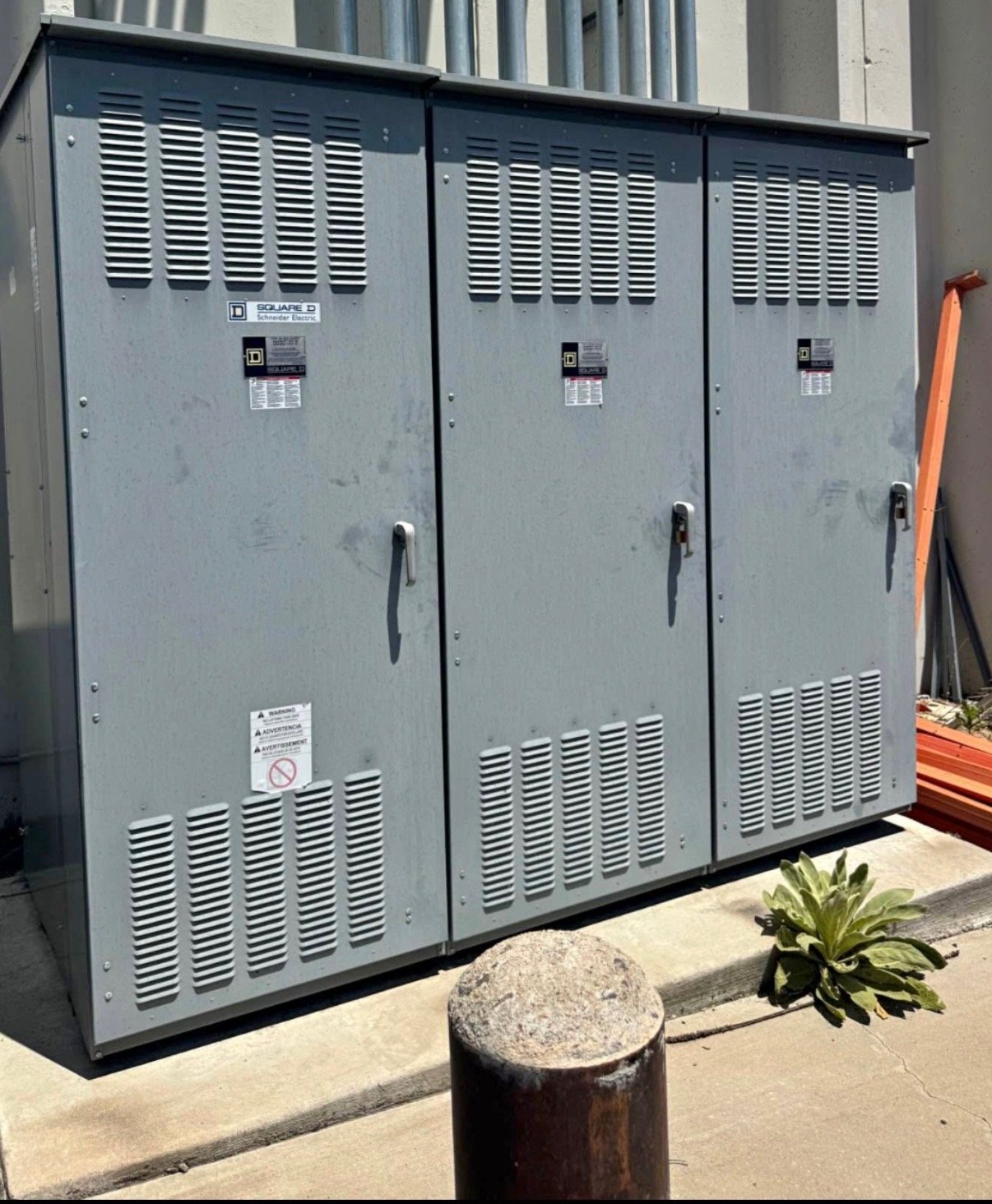
Switchboards may be made up of multiple sections, and an inventory can become unclear when only the lineup is named. Describe the sections you believe are included, using existing labels, drawings, schedules, or photographs where available. If the count or boundary is uncertain, mark it unknown instead of assuming every adjacent cabinet or enclosure belongs to the sale.
Make a separate note of accessories or associated items that may be present, such as items identified in existing records or visible in accessible photographs. Do not assume that a component is included merely because it appears near the switchboard. State what is known, what is excluded, and what remains unclear; the buyer can then review the proposed assets as a defined group rather than relying on a broad equipment label.
Use records and photographs responsibly
Useful material may include existing equipment schedules, drawings, prior inventory descriptions, and photographs taken from accessible areas. Share only information already available; no seller testing is necessary. If documents use a different voltage description from the nameplate, preserve both descriptions and identify their sources rather than silently reconciling them. That gives the reviewer context without presenting a reported site value as a verified equipment rating.
Do not open, energize, test, isolate, disconnect, move, or otherwise handle electrical equipment to improve an inventory. Only qualified professionals should handle it. If a plate cannot be read from an existing image or accessible view, report that limitation. A missing record is simply unknown; it is not evidence that the equipment lacks a feature or that a particular condition exists.
Understand review, purchase, and removal scope
Florida Switchgear Buyers considers used, surplus, and decommissioned electrical switchgear and related equipment in all voltage classes, including equipment from decommissioned data centers and closed power plants. For a 600-volt-marked board, the offer and the precise assets purchased depend on review of the specific equipment. A label, photograph, or seller’s description is not a guarantee of acceptance, condition, compatibility, or value.
For equipment purchased, the company makes cash offers, pays upfront, and handles crane, rigging, disconnects, loading, freight, and hauling. These arrangements concern purchased equipment; they are not a commitment to buy every section or accessory listed, or to perform wholesale facility demolition or general electrical services. The seller should make the proposed sale boundary clear so the review can address the assets actually offered.
Present a useful, candid offer request
A concise submission can identify the 600-volt marking, distinguish it from any reported site operating voltage, describe the included sections and accessories, and attach available records or photographs. Flag unknowns plainly, including unreadable identification, uncertain section counts, or unclear inclusion boundaries. This lets the buyer assess the specific inventory without asking the seller to certify facts that have not been established.
To discuss equipment for review, contact Florida Switchgear Buyers at (614) 715-3047 or saleselectricalbuyers@gmail.com. Share the information already on hand and describe what you believe is included; do not perform testing or electrical work for the inquiry. Any offer and purchase scope remain contingent on review, while payment for equipment purchased is upfront.