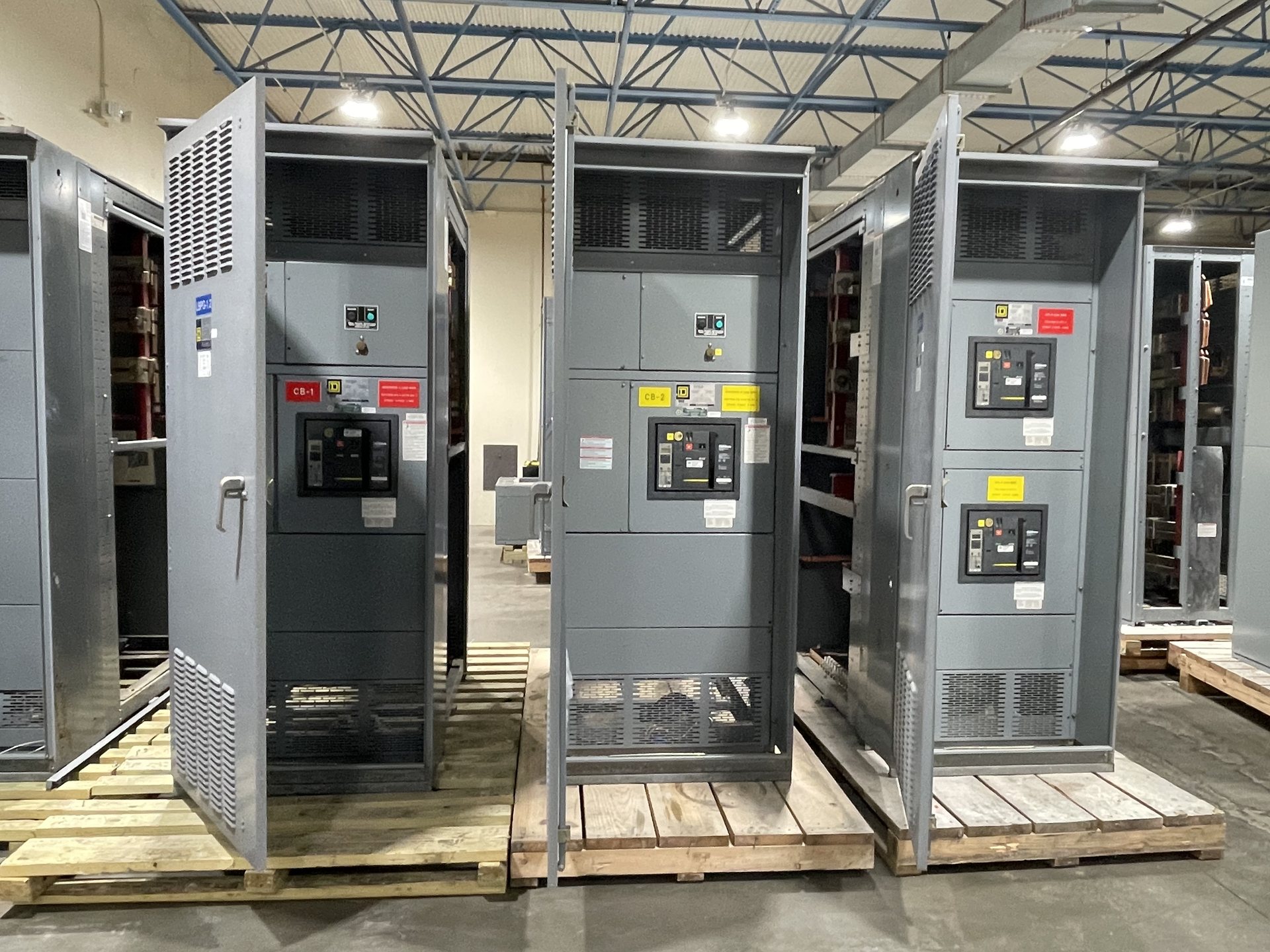
Define the equipment included in the sale
Start by deciding which marked or reported 240-volt motor control center assets are under consideration. The sale scope might include one complete lineup, selected sections, or equipment held separately as surplus. Describe the proposed boundary in ordinary inventory terms, such as the lineup and associated components believed to belong with it, while leaving confirmation of purchase scope to the buyer’s review.
Keep related equipment in separate inventory buckets rather than assuming it belongs to the motor control center. For example, list separately identified control components, spare parts, or other electrical equipment as separate items if their relationship is uncertain. A 240-volt marking can help identify an asset for review, but does not establish condition, compatibility, actual system voltage, market value, or whether the equipment will be purchased.
Use records to identify, not certify
Existing photographs and accessible records can make an initial equipment review more precise. A clear view of an exterior nameplate, cabinet identification, or available inventory record may help distinguish one section from another. Share only information already available; the seller does not need to open equipment or create new photographs by approaching an unsafe location. Any images should be taken only from a safe, accessible position.
Keep power and control information distinct when documentation actually identifies each. A record may label a power rating or separately describe control voltage, but do not infer one from the other or treat a general 240-volt description as proof of every circuit’s rating. If records do not make that distinction, say it is unknown. This preserves useful facts without converting a partial label or recollection into a technical conclusion.
Record missing ratings as unknown
An absent, obscured, or unreadable rating is an inventory gap, not evidence that the equipment lacks a particular design feature. Note the gap plainly and identify the asset by whatever accessible information is available, such as a section label or location reference. Do not estimate a rating from adjacent equipment, appearance, or assumed application. The buyer can review the specific item and decide what further information, if any, is relevant to an offer.
Likewise, a reported 240-volt rating is an identifier rather than a condition report. It does not establish whether equipment is complete, serviceable, suitable for another installation, or interchangeable with other gear. If the rating comes from a record or prior description rather than a visible nameplate, preserve that distinction in the inventory. Unknown condition and uncertain provenance are acceptable to report as unknown; do not fill those fields with guesses.
Keep the inventory useful and bounded
A simple inventory can connect each proposed asset to its available evidence: description, known label or reported rating, quantity, and whether the supporting information comes from a record, photograph, or recollection. Use separate entries when markings differ or when the relationship between sections is unclear. This helps avoid presenting a mixed group as one uniform 240-volt system when the available information does not support that conclusion.
Include omissions that could affect review, such as missing nameplate information or an uncertain count, instead of silently treating the inventory as complete. If the seller knows that certain items are not included, distinguish them from the proposed sale assets. Do not remove covers, inspect internal components, or test equipment to resolve gaps. Florida Switchgear Buyers does not require seller testing; only qualified professionals should handle electrical equipment.
Coordinate review and removal safely
The sale concerns equipment the buyer may purchase, not automatic acceptance of every item in a facility or a commitment to demolish a site. Florida Switchgear Buyers buys used, surplus, and decommissioned switchgear and related equipment across voltage classes, including equipment from decommissioned data centers and closed power plants. Whether a particular motor control center or accompanying item is included depends on review of the specific assets.
For equipment purchased, the company handles crane, rigging, disconnects, loading, freight, and hauling. Do not treat that coordination as permission for the seller to disconnect, move, isolate, energize, or otherwise handle electrical equipment. Before discussing logistics, identify any known access constraints or site coordination requirements using existing information. Qualified professionals alone should address electrical handling; the seller should not undertake work to prepare the equipment for review or removal.
Make the buyer conversation specific
When speaking with the buyer, describe what is known and separate it from what remains uncertain: the proposed quantity, any 240-volt marking or report, documented power or control distinctions, and available records or photographs. If a rating is absent or a label cannot be read, state that directly. This gives the buyer a basis to review the actual equipment without suggesting that a rating proves condition, value, interchangeability, or acceptance.
Florida Switchgear Buyers makes cash offers and pays upfront for equipment it purchases; the offer and precise purchase scope are contingent on review. To begin that conversation, call (614) 715-3047 or email saleselectricalbuyers@gmail.com. Share existing accessible documentation or photographs if available, and identify missing facts as unknown. No seller testing is needed, and the buyer’s review—not a nameplate or reported rating alone—determines which specific assets may be purchased.