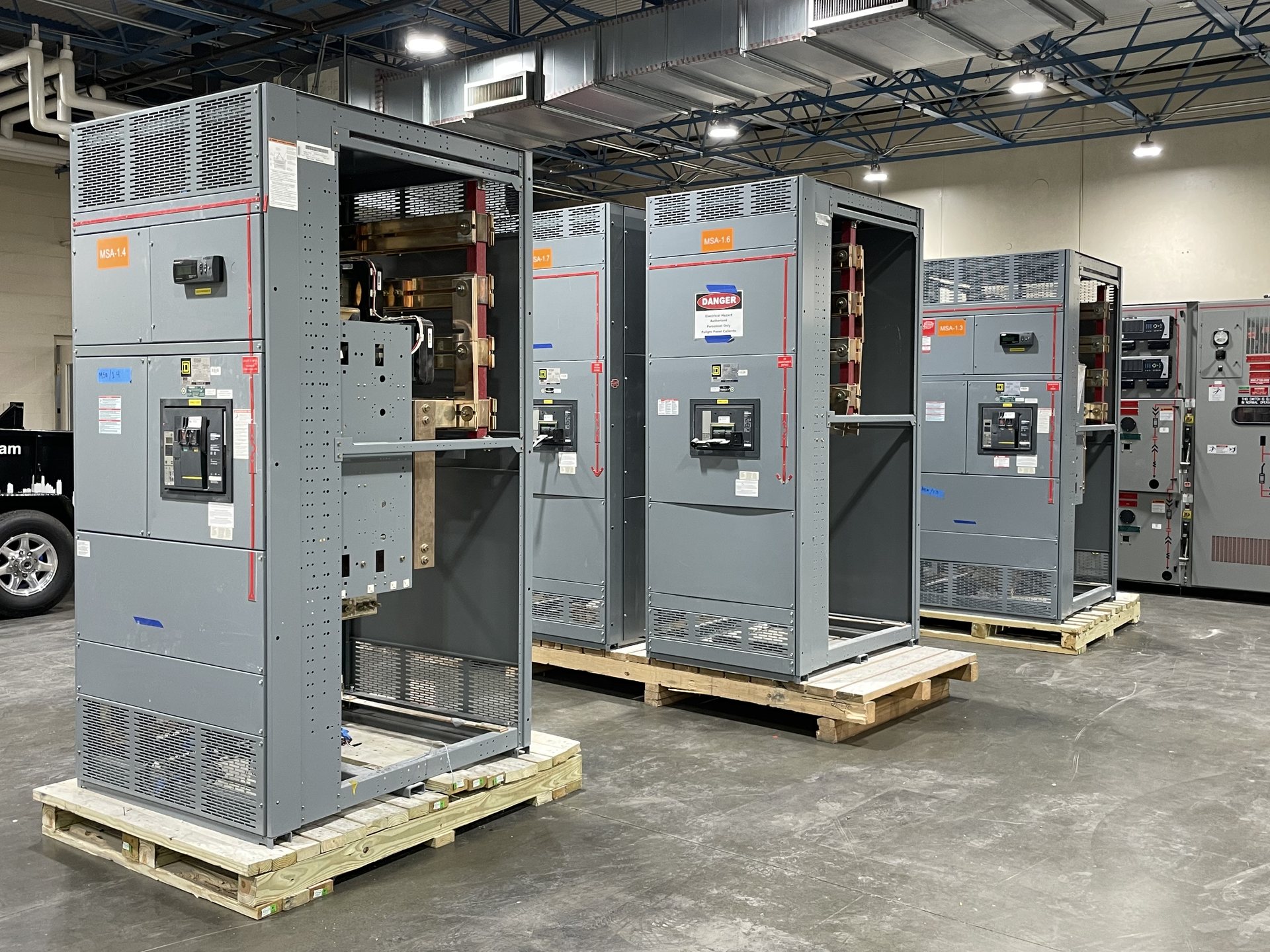
Separate the 480-Volt Identification from Other Ratings
When reviewing records for a switchboard, distinguish a 480-volt marking from the ampere ratings assigned to its main device, bus, or individual distribution sections. A document may identify the assembly as 480 V while listing different current ratings for a main breaker and downstream devices. Those figures describe different attributes; do not treat an ampere value as the switchboard’s voltage or assume one rating summarizes every section.
A seller-reported 480-volt rating can help identify the equipment for an initial review, but it is not verification of the actual connected system voltage. Nor does a label establish present condition, suitability for another installation, interchangeability, market value, or whether the equipment will be purchased. If the rating comes from a prior inventory rather than an accessible nameplate, say that plainly and identify it as reported information.
Inventory the Main and Distribution Sections
Describe the switchboard as an assembly, then record what is known about its main section and distribution sections separately. Existing schedules may show device labels, section identifiers, or listed ratings; use their wording rather than translating or guessing. If the main section is documented but distribution details are not, preserve that distinction. A partial inventory can still be useful when it clearly identifies which information is documented and which remains unknown.
For example, records might name a main section and several distribution sections but provide current ratings for only some devices. Report the listed values and note the gaps instead of applying one known value to every section. If sections are described by location or schedule number, retain those references so the buyer can compare records with available photographs. Do not infer that similarly named sections contain identical equipment.
Treat Labels and Photos as Identification Aids
Accessible nameplate photographs, exterior views, and existing inventory records can help identify a switchboard without seller testing. Share images already available to you, along with the source of any rating information. A clear photograph may show a voltage marking while leaving device ratings, section boundaries, or other details unreadable; describe the limitation rather than filling it with an assumption.
If a label is missing, obscured, or not represented in the records you have, report that condition as unknown. Do not open a cabinet, approach energized equipment, or attempt to improve a photograph by handling the assembly. Only qualified professionals should handle electrical equipment. No seller testing is necessary, and the absence of a readable label is information for review—not proof that the switchboard has a particular rating or condition.
Explain What the Rating Does Not Establish
A 480-volt marking is an identifier, not evidence that a switchboard is operational, complete, or suitable for a proposed application. It does not establish compatibility with another assembly, confirm the voltage present at a site, or show that components can be exchanged. Even when records use the same nominal voltage description, other equipment details may differ. Avoid presenting a shared marking as a claim of interchangeability or application fit.
Likewise, a recorded current rating for a main device should not be substituted for a bus or distribution-section rating unless the source explicitly identifies it that way. If documents conflict—for instance, one record reports 480 V and another contains a different description—share both references and explain their origins when known. Leave resolution to the buyer’s review; do not revise a nameplate interpretation or technical record on speculation.
Define the Equipment Under Consideration
Florida Switchgear Buyers purchases used, surplus, and decommissioned electrical switchgear and related equipment across all voltage classes. A 480-volt switchboard may be submitted for consideration, but an offer and the precise assets purchased depend on review of the specific equipment and available information. The rating alone does not guarantee acceptance, establish a price, or determine which sections or related items are included in a potential purchase.
Identify the boundaries of the proposed sale as clearly as records allow: whether the description refers to a complete switchboard, named sections, or additional related equipment. If ownership records or an inventory distinguish components, retain those distinctions instead of grouping everything under a broad label. This is an equipment-purchase process, not a commitment to demolish a facility or provide general electrical services. State what is being offered and leave uncertain scope open for review.
Share Available Information and Plan No Handling
To discuss a 480-volt switchboard, send existing accessible documentation or photographs and identify which details are seller-reported, documented, or unknown. Florida Switchgear Buyers makes cash offers and pays upfront for equipment it purchases. For purchased equipment, it handles crane, rigging, disconnects, loading, freight, and hauling. These arrangements concern assets included in a purchase; the offer and included equipment remain contingent on review.
For a review, contact Florida Switchgear Buyers at (614) 715-3047 or saleselectricalbuyers@gmail.com. You do not need to test the switchboard or handle it to prepare an inquiry. Do not open, energize, isolate, disconnect, move, or otherwise work on electrical equipment; leave any handling to qualified professionals. A concise account of the 480-volt identification, section inventory, missing labels, and available records gives the buyer a clearer basis to assess the specific equipment.