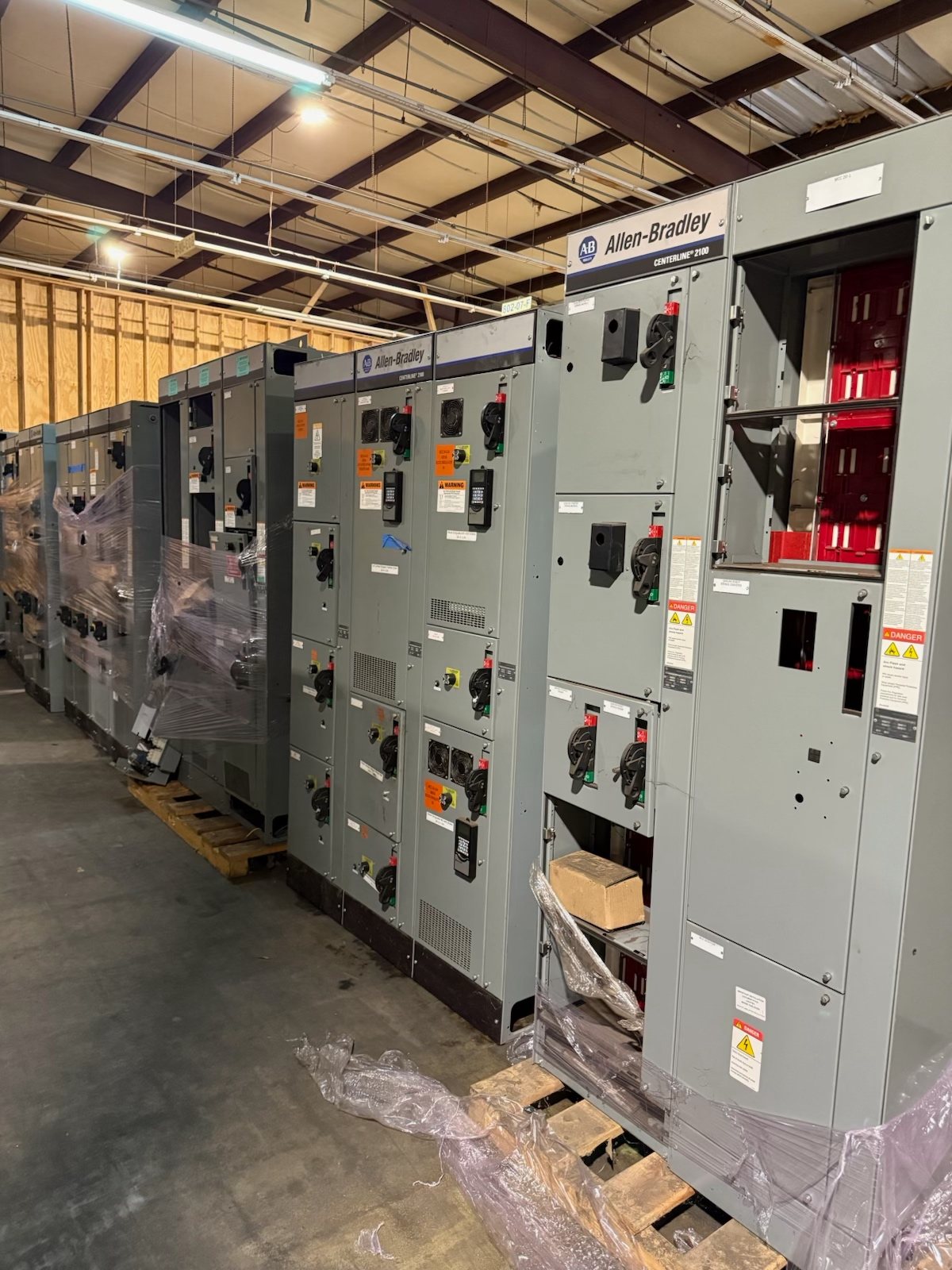
Scope the Switchboard as Separate Assets
A reported 120/240-volt switchboard may be one cabinet or a lineup with distinct main and feeder sections. Start a sale discussion by describing what is visibly included in the proposed equipment scope: the switchboard sections, attached components, and any separate related equipment you want reviewed. A seller’s voltage notation helps identify the asset, but does not by itself establish its complete configuration or what a buyer may purchase.
If the main section and feeder sections appear to be separate assemblies, describe them individually rather than assuming they must be sold together. Note which sections seem to belong to the same lineup and which relationships are uncertain. The buyer can review the specific equipment and determine whether an offer covers the full switchboard, selected sections, or other identified assets; no particular scope or acceptance is assured before that review.
Use the Rating as an Identifier, Not a Verdict
A 120/240-volt notation may come from a nameplate, project record, drawing, or someone’s description. Say where the information came from and, if it is visible in an existing photograph, share that image. A rating notation is useful for identification, but it does not prove the equipment’s condition, compatibility with another installation, actual system voltage, market value, or acceptance for purchase.
Keep equipment rating and system description distinct. A document may describe a system in terms that do not fully identify the switchboard’s own rating, while a label may be incomplete or difficult to read. If the source is unclear, report the notation as seller-reported and mark its origin unknown rather than resolving the difference through guesswork. No seller testing is necessary to begin a review.
Share Existing Records and Note What Is Missing
Useful existing material can include readable nameplate photographs, equipment schedules, one-line diagrams, section labels, or records that distinguish the main from feeder sections. Share only documentation and images already accessible to you. If a diagram identifies a lineup but not every section, explain that limitation; a partial record can still help the buyer understand what is being presented for review.
Missing labels or diagrams should be described plainly, not reconstructed as fact. You might say that a feeder section’s label is absent, a nameplate is unreadable in the available image, or no drawing is available. Do not open equipment or seek additional views by handling it. Qualified professionals alone should handle electrical equipment; the buyer can consider the available information and identify what remains unknown.
Keep Condition and Configuration Unresolved Where Needed
A reported voltage does not establish whether a switchboard is complete, operable, damaged, or suitable for a particular application. If you have reliable existing records about condition, provide them with their source; otherwise, label condition unknown. Avoid converting an old schedule or a general description into a claim about the present equipment, especially where individual sections or components may differ.
Likewise, do not infer interchangeability from a shared rating or similar appearance. Main and feeder sections can have different roles, and the available records may not establish their relationship or full configuration. These distinctions affect what the buyer can identify and evaluate, but they are not reasons for a seller to test, energize, isolate, disconnect, move, or otherwise handle the equipment.
Coordinate Review and Purchased-Equipment Removal
Florida Switchgear Buyers purchases used, surplus, and decommissioned electrical switchgear and related equipment across all voltage classes, including equipment from decommissioned data centers and closed power plants. It makes cash offers and pays upfront for equipment purchased. The offer and exact assets purchased depend on review of the specific equipment; the reported 120/240-volt description alone does not establish an offer or purchase scope.
For equipment it purchases, the company handles crane, rigging, disconnects, loading, freight, and hauling. Coordinate access and removal details as part of the buyer’s review, without undertaking electrical work or equipment movement yourself. This is purchasing and removal for purchased assets, not a promise to demolish a facility or provide general electrical services. Only qualified professionals should handle electrical equipment.
Make the Buyer Conversation Specific
A focused conversation can cover the reported rating and its source, the number of sections being offered, any known distinction between main and feeders, and which records or images are available. State directly where labels, diagrams, or configuration details are missing. This lets the buyer assess the identified assets without treating an assumption as a verified specification or requiring you to test the equipment.
To discuss a potential sale, contact Florida Switchgear Buyers at (614) 715-3047 or saleselectricalbuyers@gmail.com. You can describe the switchboard and share existing accessible documentation or photographs for review. The buyer will determine whether it can make an offer and which assets, if any, are included after reviewing the specific equipment. Payment is upfront for equipment purchased; pickup or removal scheduling remains to be determined.