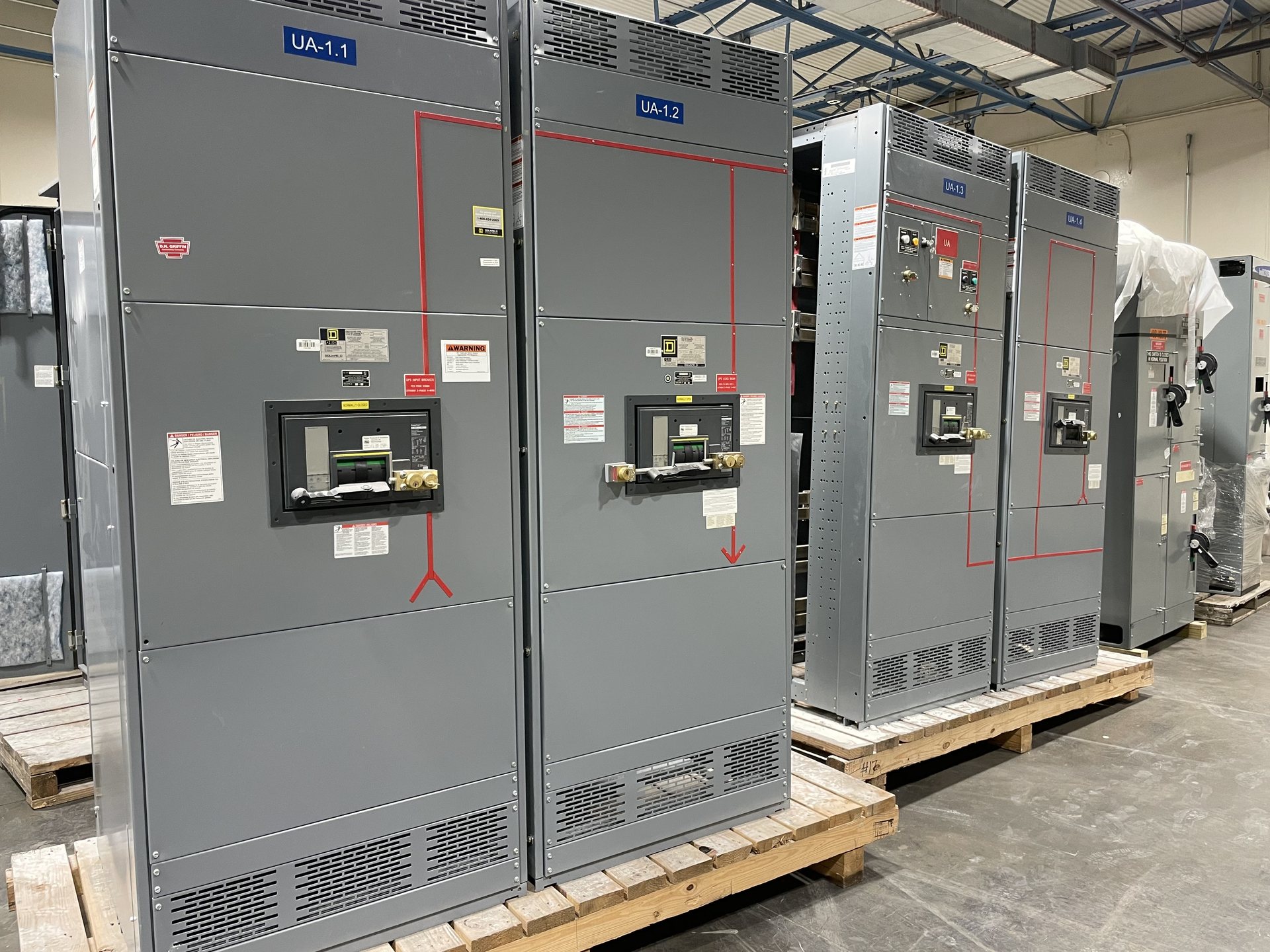
A buyer conversation about lighting panelboards in Florida
Considering a sale of lighting panelboards in Florida? Florida Switchgear Buyers buys electrical switchgear from decommissioned data centers and shut-down power plants, as well as other surplus electrical distribution equipment, in all voltage classes. We make cash offers and pay upfront for equipment we purchase. We handle disconnects, crane, rigging, removal, loading, freight and hauling, so the seller can simply get paid. No seller testing is required. The equipment is subject to review, and qualified personnel handle electrical work as needed.
The useful starting point for lighting panelboards in Florida is to distinguish the item itself from a broader description such as “electrical gear.” The proposed sale may involve one piece, separate sections, or a mixed group. Existing markings and records can help identify what is included, while the seller can openly flag details that are unknown. No model name, rating, or physical appearance by itself establishes condition or a particular offer.
Panelboard identification
A panelboard inquiry can distinguish the enclosure and assembly offered, its available manufacturer and model information, and whether multiple units are involved. Existing documentation may describe different panelboards separately even when they came from the same facility. A seller can state what is known about condition and completeness without estimating operating performance. Unknown identifying details can be left open for discussion instead of being filled in by guesswork.
Useful details often include manufacturer, model, reported voltage or amperage, quantities, and whether a piece is part of a larger assembly. Include these only when known; the absence of a field does not require an owner to invent it. Existing inventory sheets and exterior photographs can support a description, but neither a label nor an image guarantees condition. Identifying which records correspond to which piece is especially helpful in a mixed lot.
Consider equipment held in storage
Equipment held in storage can be described by its visible packaging, quantities, identifying marks, and the information already held by the owner. Storage history and condition should be stated only as far as they are known. Separate cartons, loose sections, and related paperwork can be identified as separate parts of the proposed lot. The buyer can then discuss the information needed for a realistic review rather than relying on an assumed history.
The reason an item became surplus is useful context, but it does not establish the condition or value of the equipment. An owner can distinguish the assets being offered from other equipment at the site. If the item is one part of a larger group, specify what is being considered and what remains outside the proposed sale. The buyer handles the removal and logistics for purchased equipment, while reviewing each proposed lot on its own details.
Describe condition without seller testing
Condition is more useful to a buyer when it is described in ordinary, specific terms. The owner can say whether an item is unused, previously installed, in storage, or of unknown history when those facts are actually known. Existing photographs may show external condition or packaging. If records do not establish whether something is complete or functional, the seller can say that instead of turning an assumption into a performance claim.
Seller testing is not needed for this purchase inquiry. The seller can provide information that already exists and be clear about what remains unknown. Electrical equipment should be handled only by qualified personnel; this page is not a procedure for electrical work. If the available records are limited, say so. A practical, honest description is a better starting point than making an unsupported claim about condition or performance.
Cash offers and the scope of a sale
Florida Switchgear Buyers makes cash offers for electrical equipment and provides payment upfront. An offer depends on reviewing the items and their details; this page does not quote a price or guarantee that every submitted item will receive a particular offer. The seller can explain whether the inquiry concerns one item or a group and identify the person authorized to discuss the sale. Both sides can clarify the proposed transaction before deciding how to proceed.
An owner may be comparing a sale of individual pieces with a sale of the group as a whole. In either case, the proposed scope matters: quantities, separate sections, and associated items should be described as accurately as possible. The owner can also point out missing records and ask the buyer how to present what is available. The buyer purchases the equipment and handles its disconnects, removal and logistics; the seller does not have to perform that work.
Buyer-handled removal, freight and a direct inquiry
The buyer takes care of disconnects, crane, rigging, removal, loading, freight and hauling for purchased equipment. All freight is covered by Florida Switchgear Buyers, not the seller. The seller does not need to arrange a crew, move the equipment or perform testing. Qualified personnel handle electrical work as needed. An owner can share the location and any known access details when discussing the sale, without doing the work themselves.
For a buyer conversation, contact Florida Switchgear Buyers at (614) 715-3047 or saleselectricalbuyers@gmail.com. Describe the item or lot and share any relevant information that is already on hand. If a detail is not known, say so rather than guessing. The company makes cash offers, pays upfront, and covers all freight, while the actual equipment remains subject to review. No seller testing is needed to make the inquiry.